Obedience to Leadership key factor for victory and natl. immunity: Custodian

The Custodian of Astan Qods Razavi (AQR) says following Leadership and Velayat‑e Faqih (Islamic Guardianship) is key to victory and protection of Islamic system against enemy plots.
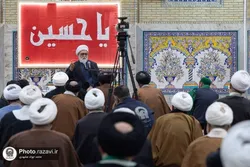
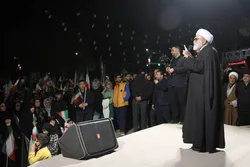
Ayat. Ahmad Marvi, the Custodian of Astan Qods Razavi, speaking during a ceremony marking the 40th day of late Leader’s martyrdom said obedience to Leadership and Velayat‑e Faqih is the key to victory and the main factor safeguarding the Islamic system against enemy conspiracies.
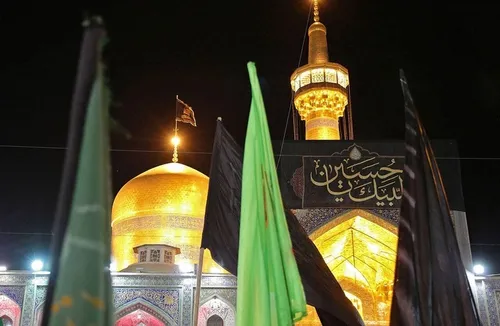
The ceremony was held at Imam Khomeini Portico of Imam Reza Shrine, in the northeastern Iranian city of Mashhad, with pilgrims and visitors in attendance.
Ayat. Marvi emphasized the necessity of following Leadership, saying: “We must follow Leadership and Velayat‑e Faqih. We believe the Supreme Jurist is the deputy of Imam Mahdi. In Ziarat Al‑Yasin we offer greetings to Imam Mahdi saying: peace be upon you when you rise and peace be upon you when you sit. This means that in every circumstance we follow our Imam and remain loyal to his command.”
He added: “Just as we express this loyalty to Imam Mahdi, we express the same commitment to the Leader of our time. This spirit of obedience has been the secret of victory and the reason the Islamic system has remained protected from conspiracies during the past forty‑seven years. These values must be preserved and protected.”
Ayat. Marvi described the martyred Leader of the Islamic Revolution as a figure distinguished by deep faith in God, decisions based on divine responsibility, and strategic Leadership. He said explaining all aspects of the spiritual life of this Leader would require many hours.
He noted: “One of the most important characteristics of the martyred Leader was his firm belief in divine assistance. He believed wholeheartedly that anyone who moves in the path of God will certainly receive God’s help.”
Referring to a memory from the Leader’s conversation with martyr Ayat. Mohammad Baqir al‑Hakim during the period of the United States occupation of Iraq, Ayat. Marvi said that Hakim expressed amazement at the Leader’s courage in confronting the United States despite its military presence nearby.
According to Ayat. Marvi, the Leader replied: “Do you know where this courage comes from? We believe in God and trust in divine assistance, and we have experienced this help many times.”
Ayat. Marvi also highlighted the God‑centered decision‑making of the martyred Leader. He explained that at times some people advised delaying certain decisions for political reasons, but the Leader responded: “I am not concerned about such matters. For every decision I make or avoid making, I must be able to justify it before God. I consider what God expects from me and what answer I will give on the Day of Judgment.”
Ayat. Marvi described the martyred Leader as a wise statesman with long‑term vision and strong political insight. He said that after the twelve‑day war, the Leader significantly increased his attention to the armed forces and devoted much of his time to strengthening and preparing them.
He explained: “The strength and authority we see today in the armed forces are the result of the wise strategies of that great Leader. Through foresight, he prepared officials and especially the armed forces for difficult days ahead, both in terms of military capabilities and in strengthening morale and faith.”
AQR’s Custodian also noted that the Leader remained firmly committed to the path and teachings of Imam Khomeini. He said the Leader was deeply devoted to Imam Khomeini and never allowed any deviation from the original principles and values of the Islamic Revolution.
Discussing the recent Ramadan War (the 9th month on the lunar calendar), Ayat. Marvi emphasized the importance of analyzing the conflict realistically. He said successes should not lead to complacency, but the achievements of the Iranian people must also not be ignored.
He said: “The reality of this battlefield is that the honorable people of Iran and the powerful system of the Islamic Republic achieved victory.”
Referring to the past one hundred and fifty years of Iran’s history, the top official noted that the country lost territories during the Qajar era through the treaties of Golestan and Turkmenchay. He also mentioned that during World War II Iran was invaded despite declaring neutrality, and that Bahrain separated from Iran during the Pahlavi era without resistance.
He emphasized that the situation today is very different, stating: “In the recent conflict we faced a global power with nuclear capability. In war, victory is not measured by the amount of damage inflicted but by achieving objectives.”
According to Ayat. Marvi, the enemy believed that assassinating the Leader and senior commanders would quickly collapse the Islamic Republic and create internal conflict. However, he said these calculations proved incorrect.
He stated: “Iran today possesses real independence. This is not merely a slogan but a clear and objective reality. The enemy predicted that the Islamic Republic would collapse within a few days or weeks, but these expectations failed.”
The Custodian of Astan Qods Razavi emphasized that the Iranian system is built upon strong institutions and popular support rather than reliance on individuals. He said that although the martyrdom of the Leader deeply saddened the nation, it did not weaken the determination of the people or the armed forces.
He explained that despite losing several commanders and senior officials, society remained stable and confident because people understand that the system is based on strong structures and broad public support.
Ayat. Marvi also praised the government’s performance during the crisis, saying the government successfully maintained the supply of essential goods and prevented economic instability.
He noted that while crises in some Western countries led to panic buying and social disorder, Iran maintained calm even in cities facing direct military threats. He said this stability reflected the mutual trust between the government and the people.
Referring to the enemy’s expectations of unrest within Iran, the head of AQR said the opposite occurred and strong national unity emerged across society.
He stated: “The enemy expected internal unrest, but instead the Iranian people demonstrated remarkable unity and support for the Islamic system. The true power of this country lies in its people.”
Ayat. Marvi also said that many international calculations against Iran failed during the conflict. He noted that even alliances such as NATO did not intervene as expected and that disagreements emerged within the United States political and military Leadership.
He added that attempts by the United States to create political achievements from the conflict ultimately failed.
Ayat. Marvi further discussed negotiations with foreign powers and emphasized that those talks are only one aspect of confronting the enemy. “We trust our political officials and negotiating team. Whatever decision the Islamic system makes will be respected.”
Addressing the negotiators, he warned them to remain vigilant and remember that the United States acts as a hostile power.
Quoting the Quran, he said: “Satan is truly your enemy, so treat him as an enemy.” He explained that the verse reminds believers not to trust those who seek to mislead and exploit others.
He urged negotiators to rely on divine assistance, the support of the Iranian people, and the strength of the armed forces, while remaining cautious of deception.
Ayat. Marvi concluded by emphasizing that national unity is the most powerful deterrent for any country.
He said: “The greatest source of strength for any nation is the unity of its people, which can be even more influential than nuclear weapons. One of the most repeated recommendations of the martyred Leader after the twelve‑day war was preserving unity.”
He stressed that protecting national unity and social cohesion is essential for safeguarding the security and strength of Iran.
Related News

Post comments
- Editor's suggestion
- Latest news
IRIU, Ministry of Foreign Affairs forge scientific diplomacy ties
Future diplomats tour Imam Reza Shrine
Iraqi students visit Imam Reza Shrine
Razavi University, al-Mustafa International University launch joint cooperation center
Malek Museum unveils exhibition on devotion to Prophet Muhammad
Khorasan Razavi MPs support AQR development plans for Imam Reza Shrine
AQR research deputies strengthen international synergy
Darvazeh Bathhouse reflects Safavid-era history in Mashhad: Expert
Sunni influencer recalls shattered stereotypes during visit to Imam Reza Shrine
International Islamic Unity Conference continues strategic vision of Iran’s leaders
Iran is a unique model of peaceful coexistence: Muslim activist
Imam Reza Shrine plays pivotal role in Islamic unity: Bahraini scholar
40th Islamic Unity Conference concludes in Mashhad
40th Islamic Unity Conference concludes in Mashhad
Imam Reza Shrine adorned for birth anniv. of Prophet, Imam Sadiq
Arab pilgrims honor birth anniv. of Prophet, Imam Sadiq
Afghan collector donates rare stamps to AQR
Imam Reza Intl. University, Razavi University expand international cooperation
AQR Custodian meets martyr Larijani's family members
Intl. landscape design and memorial space competition for Shajareh Tayyebeh School martyrs' cemetery
Dust-cleaning ceremony held at Imam Reza Shrine
Campaigns